
From the 26-27th of September 2018, members of the Humanitarian Health Ethics research group (HHERG) met in Geneva with some of our local research leads and with knowledge users from the humanitarian healthcare sector in Geneva to share preliminary findings from our two R2HC-funded studies (Perceptions of Ebola Research and Ethics and Palliative Care in Humanitarian Settings). The aim of the two day event was to obtain feedback on analysis done to date, validate theories, and gain perspective on ways in which the knowledge gained through research can be applied in humanitarian healthcare policy and practice.
DAY 1:

On September 26th, 2018 Elysée Nouvet and Lisa Schwartz, co-primary investigators, shared findings and invited reflective feedback on – Perceptions of Ebola Research During the 2014-15 Outbreak in West Africa.

Event Highlight
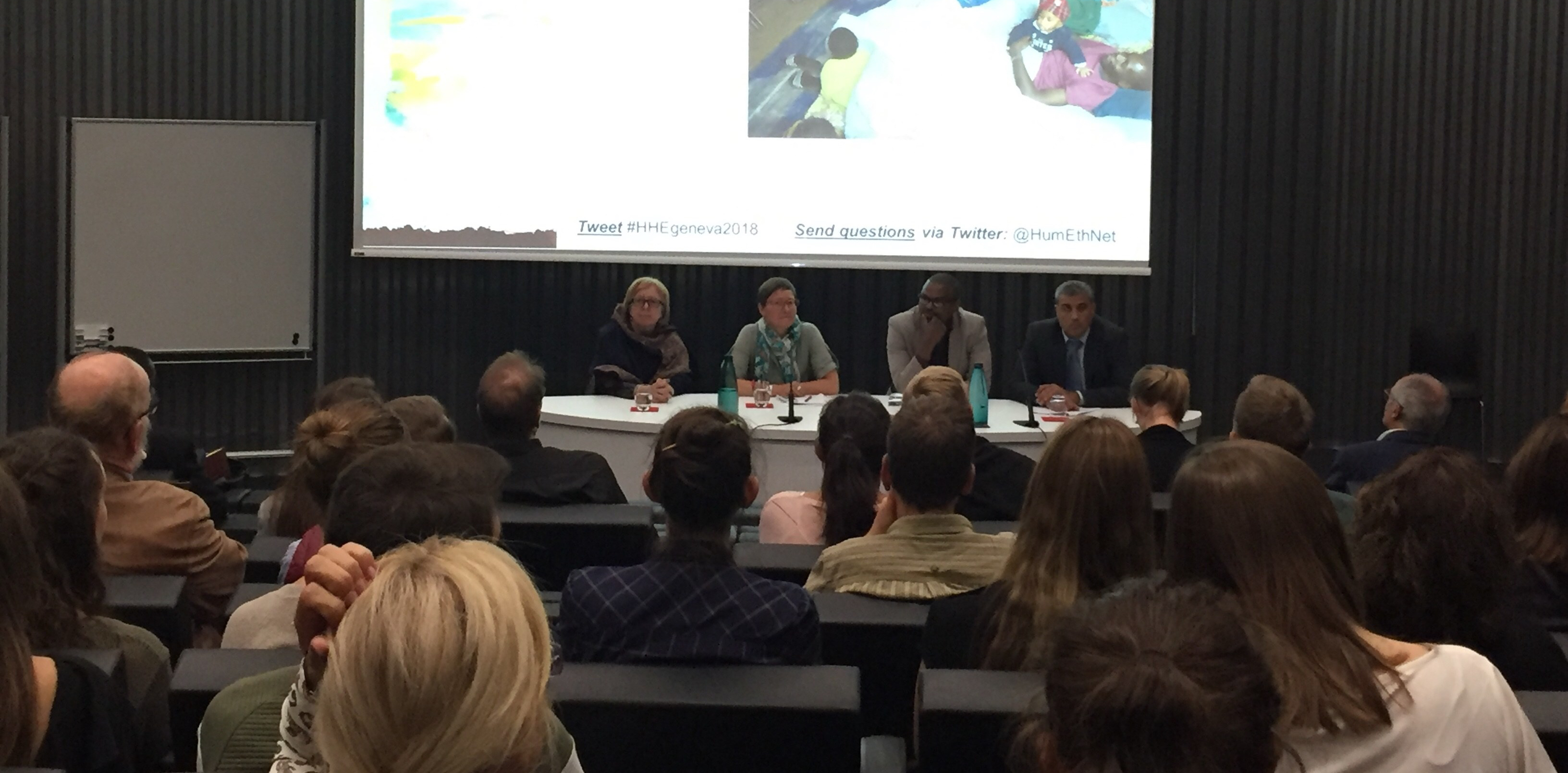
Small Humanitarian Acts That Make All the Difference in End-of-Life Care?
An International Panel Presentation
📅 Date: 26 September
📍 Location: Maison de la paix, Geneva
🤝 Co-hosted by: HHERG & CERAH
🎙️ Keynote Address
Dr. Paul Bouvier
Dr. Bouvier opened the evening with a keynote inspired by his influential essay,
“Humanitarian care and small things in dehumanised places” (2012).
His reflections set the tone for an evening focused on the ethics, humanity, and impact of seemingly small acts of care in crisis settings.
💬 Panel Discussion
Following the keynote, a panel of international experts discussed how small, often-overlooked gestures can profoundly shape the experience of care for those at the end of life during humanitarian emergencies.
This panel built on insights from our ongoing study, applying Dr. Bouvier’s lens to real-world findings.
DAY 2:
On the second and final day of the event series, the focus turned fully to the ethics of palliative care in humanitarian settings.
Presentations by Co-Primary Investigators
Matthew Hunt and Lisa Schwartz shared key insights from the study, offering:
- Emerging themes on dignity, decision-making, and palliative strategies in humanitarian response
- Summaries of the main research components
- Reflections on ethical challenges in crisis care
Explore:

Video summaries of each research component
Critical interpretive synthesis literature review:
Transectoral survey:
Initial set of interviews: Obstacles & Moral Experiences:
Public Health Emergency — Guinea:
Acute Conflict / Refugee Context — Jordan:
Protracted Conflict / Refugee Context — Rwanda:
Natural Disaster Array:
 HUMANITARIAN HEALTH ETHICS